Santiago's First Surgery
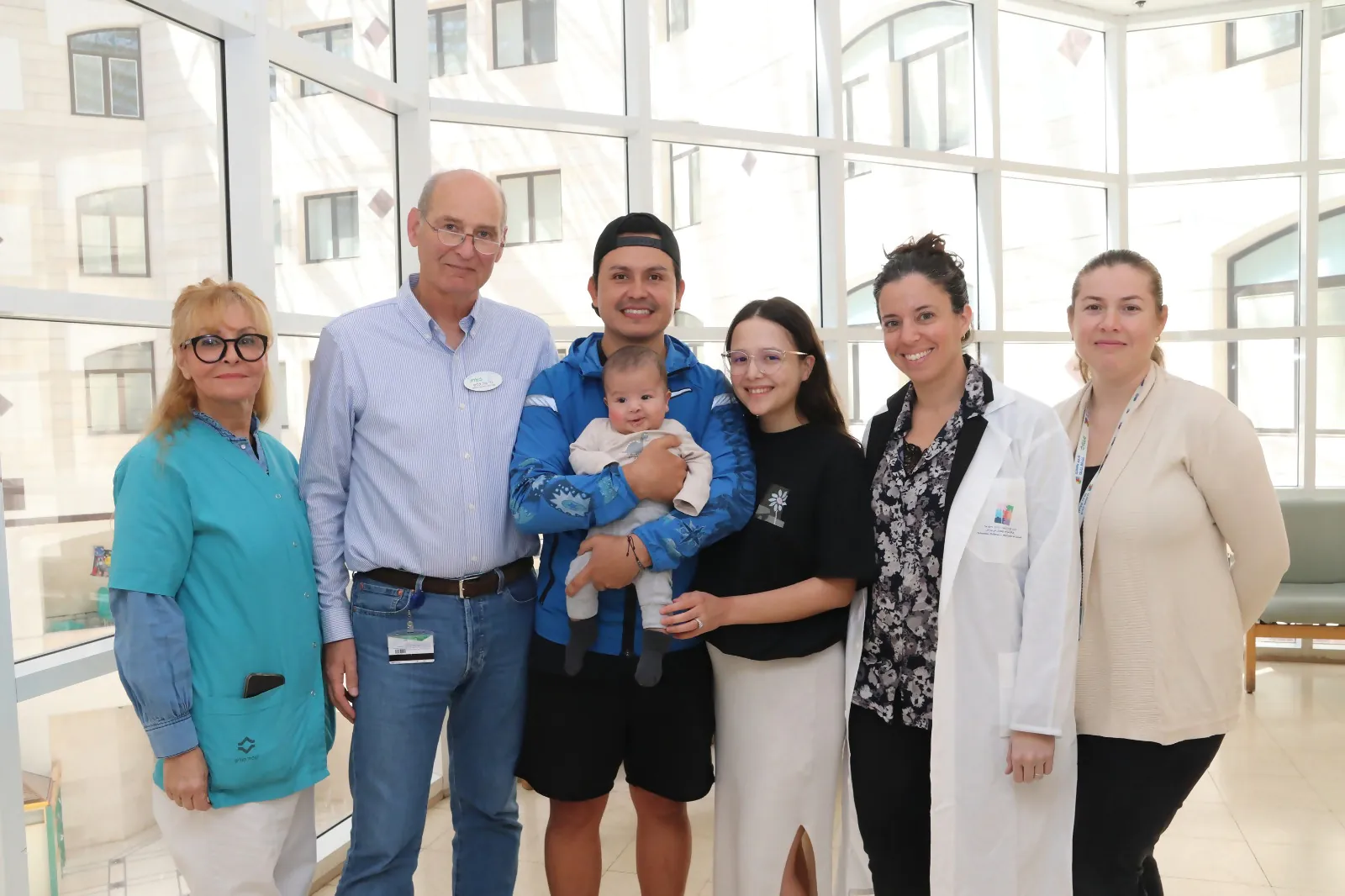
Even before Santiago was born, his parents knew he would require medical attention. Prenatal testing confirmed that Santiago would have a cleft lip and palate—a congenital condition that affects feeding, speech, hearing, and facial development.
Santiago’s parents made a decision that would shape the rest of their child’s life. They traveled from Guatemala to Israel so that Santiago could be born near Schneider Children's Medical Center and receive specialized care immediately.
Schneider Children's Medical Center is Israel's only stand-alone pediatric hospital, providing advanced pediatric care to children from around the world. Children just like Santiago.
Santiago was delivered at full-term via cesarean section. Following birth, he underwent pre-surgical treatment to move the cleft segments together and shape his nose gradually.
While performing these treatments, doctors identified additional issues: Santiago had low blood sugar and a congenital cortisol deficiency. Straight away, Santiago received a comprehensive evaluation and treatment at the hospital's Institute of Endocrinology and Diabetes. All the while, his medical team continued to prep Santiago for reconstructive surgery.
At three-and-a-half months old, Santiago underwent his first procedure. Dr. Eyal Kalish, Director of the Plastic Surgery Unit, and Dr. Dafna Shilo Yaacobi performed cleft lip repair, correction of the front portion of the palate, and primary nasal reconstruction—all in one comprehensive surgery.
Two weeks later, Santiago and his family flew home to Guatemala. In six months, they will return to Israel for a second procedure to repair the back of the palate, a step that's critical for normal speech development.
Children born with cleft lip and palate require long-term care. This includes multiple surgeries over several years, speech therapy, and ongoing monitoring. At Schneider Children's, that care is coordinated across surgical, medical, and developmental teams who work together from the child’s birth through adolescence.
For Santiago's parents, the decision to travel thousands of miles hinged on giving their son access to that kind of integrated care from the day that he was born.
Santiago is healing well—and on his way to a full recovery.
Moving Children Back to Their Wards After 40 Days in the Fortified Emergency Complex
In April 2026, as Iran launched ballistic missile attacks on Israel, Schneider Children's moved its patients into its fortified underground complex, where the hospital continued operating for 40 days. This video captures the moment the wards reopened and children were transferred back to their rooms, one by one, with their equipment and caregivers alongside them.
Protecting the Children: Roaring Lion
Filmed on February 28, 2026, at the onset of Operation Roaring Lion, this video captures Schneider Children's staff and volunteers calmly relocating patients to fortified floors as missiles struck, ensuring every child felt safe and every treatment continued without interruption.
Done, But Not Completed
In November 2023, following the October 7 attacks, Schneider Children's provided care to 19 children released from captivity, along with six mothers and two grandmothers. Faced with an unprecedented challenge and no clinical roadmap, a multidisciplinary team of physicians and mental health professionals developed an entirely new treatment protocol for child hostages returning from prolonged captivity. This video documents those first moments of return and the beginning of recovery.